Some Books About D-Day


D-Day June 6, 1944


"You are about to embark upon the 


great crusade toward which we have striven these


many months. The eyes of the world are upon you...


I have full confidence in your courage, 


devotion to duty and skill in battle."


                                                       General Dwight D. Eisenhower 


Tuesday, June 6, 1944


My dearest Kitty,


"This is D Day," the BBC announced at twelve. "This is the day."


The invasion has begun!
                             Anne Frank


Today is the 75th anniversary and the world is honoring the heroes of that day in a big way - as we should. The D-Day landings on the Normandy coast by American, British, and Canadians soldiers and all the equipment they brought with them sometimes seems like an overwhelming mission, it feels like a miracle that it succeeded at all. But it did, and it change the course of the war. The allied invasion cost so many people their lives, and as the quote from Anne Frank reminds us, it was a momentous turning point, not the end of the war.


There are a number of very well written books about D-Day which I've already read (but haven't necessarily reviewed) and I would like to share them with you today.


Nonfiction:


by Ronald J. Drez


National Geographic Children's Books, 2004, 64 pages


by Rick Atkinson


Henry Holt and Co., 2014, 224 pages


D-Day: The World War II Invasion The Changed History


by Deborah Hopkinson


Scholastic Press, 2018, 400 pages


D-Day: Untold Stories of the Normandy Landings


inspired by 20 real-life people


written by Michael Noble, illustrated by Alexander Mostov


Wide Eyed Editions, 2019, 48 pages


This is a picture book for older readers (age 8-12). I loved reading about these "stories of bravery, sacrifice, and innovation. 


Invasion: The Story of D-Day


by Bruce Bliven, Jr.


1956, 2017


I haven't reviewed this book yet, but it is a very detailed look at what it took to prepare for the D-Day allied invasion and it's aftermath, there is just one problem with it -  there is absolutely no sourcing. I gave it a four star rating for the prose content, but a one star for the sourcing.


Fiction:


by Lauren Tarshis


Scholastic, 2019, 144 pages


by Kate Messner


Scholastic, 2018, 160 pages


Barrington Stoke, 2019, 120 pages


Walter Dean Myers


Scholastic Press, 1999, 2012, 144 pages


by Walter Dean Myers


Scholastic Press, 2013, 224 pages


by Amy McAuley


Walker Children's Books, 2012, 326 pages


D-Day Dog by Tom Palmer


Jack Ashville, an 11-year-old living in England, had always wanted a dog, and finally his parents had said yes. Now, except for school, he and Finn are inseparable, and Jack has worked very hard taking care of Finn and having fun with him. But Jack also loves to play video games with his dad, a soldier in the Army Reserves. Their newest video game is based on the D-Day invasion of June 6, 1944, and while his dad wants to teach Jack something about D-Day before playing, Jack just wants to get to the video game. Then, Jack learns that his father might be deployed to a war zone, and he couldn't be more excited.


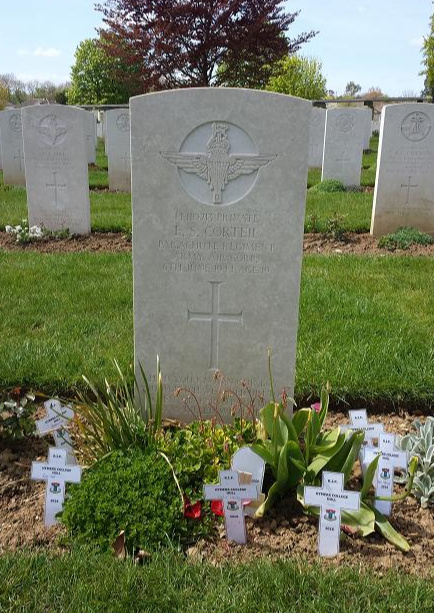
At school, Jack's class is beginning to learn about the D-Day invasion of the Allies in World War II in preparation for a class trip to the beaches of Normandy, France. One of their assignments is to pick a soldier who died on D-Day and is buried in Ranville Cemetery there and learn all about them. Then, when they arrive at Ranville, each student can plant a small cross with a poppy on it on the soldier's grave.


At first, Jack is pretty gun-ho about the trip, but after hearing his parents fighting about his dad's deployment, and learning that his dad would be staying at this


grandmother's for a while, until things can be worked out, he's feeling a little deflated about everything. However, when his teacher suggests Jack research "D-Day and dogs," his enthusiasm picks up again as he's sure he's found the perfect soldier to honor.


That is until he reads about what happened to his soldier and the dog he trained to parachute out of an


airplane on D-Day. Emile Corteil was a young private in the 9th Parachute Regiment and Glen was his German Shepard. When it came time to jump, Glen got spooked by all the noise below and Emile had to literally throw him out of the plane. The jump didn't killed them, but both did die on June 6, 1944. Reading their story, Jack become so angry at what he feels is Emile's betrayal of Glen, that he subsequently refuses to go on the class trip. In fact, Jack does a complete 180° turn, now finding the reality of war to be abhorrent.


Trouble is nobody's having any of that and Jack finds himself on the bus sitting between his friend Lucas, a special needs student, and Kassandra, a girl whose family had to flee their home in Aleppo because of war. But anger causes Jack to act out and now his punishment is to sit by the bus driver, a gruff, chain-smoking old soldier, and apart from the other kids.


Needless to say, Jack's class trip is a real eye-opener for him as he learns not just about the cost of war in human life, but also comes to understand why people are willing to fight and die for what they believe, and that there is a big difference between the reality of war and war fought in a video game.


Grave of Emile Corteil and
Glen in Ranville
Cemetery


It is interesting to read the way Palmer has brought three subsequent wars into this story. There is Jack's dad, who could be sent to fight in the war in Afghanistan, the bus driver who had fought in the Falklands War, and Kassandra, a refugee from Syria whose family lost everything, including her beloved dogs, in the fighting there. American readers may not be familiar with the Falklands war, but there is enough about it in the driver's story to understand what happened. Each one contributes to Jack's increasing understanding about war.


Palmer has poignantly captured the volatility of an 11-year-old's feelings and emotions in Jack, which run the gamut of happy, sad, angry, betrayed, and even understanding. Jack romantic, almost idealistic ideas about war come crashing down when he learns that his father actually puts his family first and being a soldier second, and those ideas seem to just spiral down as the story goes along until Jack can finally see his way to a more realistic concept of war, making this a nice coming of age story.


I have to admit, I knew nothing about paradogs until I read D-Day Dog but although found the idea interesting, I felt a big like Jack when he discovered what happened to Glen. I would definitely recommend D-Day Dog as it is a well-written contemporary story and a timely book for young readers who may be interested in WWII. 


You can find all kinds useful resources for D-Day Dog on author Tom Palmer's website HERE


This book is recommended for readers age 9+

This book was purchased from my personal library from Book Depository


There is a recent addendum to the story of Emile Cortiel and his dog Glen. Emile and Glen were buried together in Ranville Cemetery, even though it was a breach of military rules, but as of now, there is no mention it anywhere. Now, a new British memorial is to be built to honor the men and women killed in 1944 liberating France and will include a memorial dedicated to all the animals who were killed in action during the summer of 1944, including Glen. You can read the whole story HERE


Emile Corteil and Glen


Dutch Girl: Audrey Hepburn and World War II by Robert Matzen


I spent a lot of afternoons watching movies with my best friend growing up, and one of our favorite screen stars was Audrey Hepburn. I can't count the number of times we saw Roman Holiday, Charade, and Breakfast at Tiffany's? Audrey Hepburn was the quintessential Holly Golightly. So when I saw that a book about her life during World War II had been written, I was really excited to read it, especially when I realized I knew nothing about Audrey Hepburn's off-screen life.


Robert Matzen has written a biography that focuses mainly on Audrey Hepburn life during the Second World War when she was living under Nazi occupation in Holland, with her Dutch family on her mother's side. Hepburn was only 11 years old when the Nazis invaded, and it would understandably have a deep impact on her. In fact, all through her adult life, Audrey was haunted by what much of what she witnessed and experienced during WWII.


Audrey was born in 1929 to a Dutch mother, Ella, Baroness van Heemstra and a German/English father, Joseph Ruston, but money problems soon meant Ruston would be gone a largely absent father. Audrey, her mother, and two stepbrothers, Alex and Ian, found themselves living in Arnhem with her Opa, Baron van Heemstra and his wife. Then, in the early 1930s, both Joseph and Ella fell under the influence of Sir Oswald Mosley, head of the British Union of Fascists, and both parents became strong supporters of Hitler. In fact, Ella wrote two published articles in support of National Socialism, she even attended the 1935 Nuremberg rally, and is present in a photo with Hitler and others at Nazi headquarters in Munich.


But after the Nazis defeated the Dutch in 1940 and began occupying Holland, life changed for everyone. With her country under siege, and life getting more and more difficult, Audrey threw herself into ballet. She had begun ballet while in school in London, and it remained her greatest passion throughout her life. Though her first performances as a ballerina were for German audiences, Audrey later used her increasing dance skill to raise money for the Dutch Resistance, evenings referred to as zwarte avonden or black evenings. She spent much of her time volunteering for Dr. Visser't Hooft, a leader in the Dutch Resistance, at his hospital It was he who encouraged her dancing in service of the resistance.


But Audrey's life during WWII wasn't all about dance. She took the death of her beloved Uncle Otto van Limburg Stirum, executed by firing squad with four other men in retaliation for resistance activities, very hard. Witnessing the Nazi's cruel treatment of Dutch Jews, and later their mass deportation was also seared in her memory. But it was the deprivation and starvation of the last year of the war, the Hunger Winter, that seems to have had the greatest impact on Audrey physically as well as mentally and influenced her relationship with food for the rest of her life, and perhaps even her decision to serve as a representative for UNICEF, the United Nations organization that provides world-wide emergency food and healthcare to children.


Matzen has written an intense, exciting biography of Audrey Hepburn. Interestingly, he has interspersed chapters about her later life as it relates to WWII. It appears that Audrey never quite reconciled her parents support of Hitler and National Socialism, but there was an unspoken agreement between mother and daughter to never speak of it in public, though she lived in fear that it would be discovered.


But Dutch Girl is more than just Audrey Hepburn's wartime experience. It is a very well-researched  history of World War II, as it relates to the Netherlands. Holland was a peace-loving country that was traumatized by constant dogfights in the air between Allied and German pilots, heavy bombing and towards the end of the war, the particularly destructive V1 and V2 bombs meant for England but landing in Holland when they malfunctioned. And although Hitler thought the Dutch were Germany's Aryan cousins, as things intensified, they were treated with more and more cruelty.


Included in Dutch Girl are extensive photographs, maps, Chapter Notes, and Selected Bibliography.


On a personal note, I found Dutch Girl to be especially valuable because of my interest in the impact of war on children, part of the reason I began this blog in the first place. I was really glad Matzen included the chapters about Audrey Hepburn's life after the war, often quoting her. I could see the impact of WWII on her young life in a way that fiction often doesn't provide. It is very well written and organized, and I found I could not put this book down once I began reading it.


Dutch Girl is, I think, a book that will appeal to people interested in WWII history, more so that those who simply might be looking for a book about the glamorous life of a movie star.


This book is recommended for readers age 17+

This book was provided to me for purposes of review.


Memorial Day 2019

I thought I would repost my Memorial Day post from 2012 because I fear that I can feel the winds of war as blowing once again, however faintly, and I thought a reminder of what Memorial Day is all about might help us remember why we have this three-day weekend at the end of May.


Memorial Day, or Decoration Day, as it used to be called, originated in 1868, when General John A. Logan declared May 30th the day for remembrance, a day when the graves of those soldiers who had fallen in battle during the Civil War were decorated with flags, flowers and wreaths as a way of honoring and remembering them. Logan picked May 30th because it was a day on which no battles had occurred in the Civil War. The tradition continued, and, in the 1880s, Decoration Day became Memorial Day. In 1968, the Uniform Monday Holiday Act was passed and in 1971, Memorial Day would always be celebrated on the last Monday in May, giving us the three-day weekend we now have.


FYI: I was reading one of my twitter feeds and came across some information about the first Memorial Day. Apparently on May 1, 1865, a group of former slaves in Charleston, SC gathered to honor the 257 Union soldiers who were buried in a mass grave in a Confederate prison camp. I learned this from Joe Braxton (@TheJoeBraxton), and you can find out more about how this was discovered HERE


In all of our national cemeteries, they still mark all the graves with a flag for this weekend.  This makes me feel good, since my younger brother is buried in one of those cemeteries. 


Every Memorial Day, I always think of the poem "In Flanders Fields" because I had to learn it, along with Walt Whitman's "O Captain! My Captain!," in school and I'v never forgot it.  The poem has an interesting history.


In 1915, Lieutenant Colonel John McCrea who a poem called "In Flanders Fields" while presiding over the funeral of a fellow fallen soldier who was killed in the Second Battle of Ypres in Belgium and buried in Flanders Fields, a field were red poppies grew everywhere.  McCrea was not very happy with the poem he wrote and threw it away, but one of his fellow officers saved it.  It was published in Punchon December 8, 1915. 


My favorite version of "In Flanders Fields" is What Have We Learned, Charlie Brown? which was broadcast for Memorial Day in 1983, in which Linus recites the poem while the Peanuts gang is visiting the cemetery there:


By the way, if you see a vet selling poppies this weekend, and you decide to buy one, remember that the money goes towards helping needy veterans.  Oh, and by the way, they are made by vet themselves, and although they receive a small amount of money for making poppies, for so many,  it is their only source of income.


All this being said, have a healthy and safe Memorial Day and have some fun, too.


Lastly, thank you to all the scouts, scout leaders, parents, and other volunteers who will again be decorating the graves of soldiers at Calverton National Cemetery this year. 


In Memoriam


FCP 1955-2001


When We Were Warriors by Emma Carroll


After reading Emma Carroll's WWII book Letters from the Lighthouse a while back, I knew I was going to have to go back for more. So I was pretty happy when I read about When We Were Warriors and ordered it from Book Depository immediately.


This time, instead of a complete novel, Carroll has written three short stories, all set in the summer of 1942, all along the Devon coast, and connected to each other by an interesting thread.


Story number 1 is called "The Night Visitors" and the main protagonist is a boy named Stan. Living in Bristol, Stan and his sisters are on their way to get some fish and chips for dinner when a bomb hits and changes their lives. With their house destroyed, and their mum hurt rather badly, Stan, older sister June, and younger sister Maggie are evacuated to the Somerset hills, to a large old supposedly haunted house called Frost Hollow Hall, joining other kids who have already been there for a while.


No sooner are they told about the three places on the property that are off limits to all the evacuees, then June and Clive Spencer, a smirky troublemaker, come up with a game of dare - it's the boys against the girls, and whichever team nicks the most things from each forbidden areas is the winner. Just as the game takes off, American soldiers arrive when one of their drivers, Eddie Johnson, drives right off the road and into a ditch outside Frost Hollow Hall. Left there to take care of the vehicle, things suddenly take a very strange turn.


The second story is called "Olive's Army" and takes place Budmouth Point, not far from Frost Hollow Hall. Londoners Olive and younger brother Cliff live with Ephraim Pengilly, the lighthouse keeper, while older sister Sukie and friend Esther, who had come to England on the Kindertransport, live with Queenie, the postmistress. Needless to say, Olive is quite shocked when Sukie announces that she is going to marry Ephraim, as soon as she asked him. But when a body washes up on the beach with identity papers claiming he is Ephraim Pengilly and that he is German, Sukie's fiancé is taken away to Plymouth for questioning - the day before their wedding.


Enter the Americans - who decide that the papers the dead man is carrying are plans for the German invasion everyone in Britain has been expecting. Off they go, following the plans to stop the invasion and leaving one soldier behind to guard the dead body. Yep, none other than Eddie Johnson. But what happens when Olive figures out what the German's plan is really about? Can she convince everyone, including Eddie, of what she's worked out and stop the invasion?


The third and final story is called "Operation Greyhound" and takes place in Plymouth, just up the coast from Budmouth lighthouse. Plymouth has already been nearly bombed out of existence, but when yet another air raid siren goes off, Velvet Jones heads to the shelter with her best friend Lynn. Luckily, their shelter warden, Mr. Perks, lets everyone bring their pets to the shelter, too. But on this night, they have a new warden, Mr. Jackson, and he is not letting pets into the shelter anymore. And now it's even more crowded that usual as people from Portland Place are sharing the shelter, thanks to bombing, including stuck up Mrs. Clements and son Robert.


Velvet and Lynn take it upon themselves to find an alternative pet-friendly shelter, but on the first night, Velvet finds a man lying in the street as bombs begin to fall, and yep, it's Eddie Johnson, American soldier. After helping him, Velvet realizes that their alternative shelter isn't going to work out, and she and Lynn decide to find another solution. But when they discover their truth about Robert Clements's father and then he and his pregnant dog go missing, the girls make some surprising discoveries, because sometimes people just aren't who or what you think they are. 


When I first got When We Were Warriors, I was a little disappointed to see it was three stories instead of a novel, but no sooner did I begin reading, and I was totally hooked, reading it straight through. It was, simply said, unputdownable.


And there were a lot of things I liked about this book. I loved that the stories are connected to each other by the presence of Eddie Johnson, an African American soldier on his own personal mission and whose life is ultimately changed. I also loved that so many characters were diverse. I had no idea how diverse small towns along the coast of England were at the time, but I somehow found it plausible. And I did discover that there apparently was some diversity in port cities, thanks to WWI (see Mixing It: Diversity in World War Two Britain by Wendy Webster, Oxford UP, 2018).


Did you recognize Olive, Sukie and Cliff in the second story? That's because they are the same wonderful characters in Letters From the Lighthouse and they are every bit as appealing. Remember Frost Hollow Hall in the first story? Well, I didn't, but you can bet the book by the same name will be the next Emma Carroll novel I read.


If you are looking for a great book that explores themes of family and friendship along with some mystery and adventure, look no further that When We Were Warriors for a wonderfully satisfying middle grade book.


This book is recommended for readers age 9+

This book was purchased for my personal library

Captain Rosalie by Timothée de Fombelle, illustrated by Isabelle Arsenault, translated by Sam Gordon


In this short novella, a 5½-year-old girl calls herself Captain Rosalie, thinking of herself as a soldier on a secret mission during WWI, spying on the enemy and preparing her plan of action. And she is sure that one day she will be awarded a medal for what she does.


Living in a small French village, Rosalie is really too young for school, but the teacher, a wounded war veteran, lets her sit quietly drawing in the back of his classroom every day while her father is away fighting in the war and her mother works in the factory for the war effort. Rosalie is given a notebook and pencils with which to draw. But since it contains her plan of action, she never, never leaves the notebook where it can be found.


At night, her mother reads letters from her father at the front, a father she has almost no memory of. Instead of writing about war, he writes about what they will do when the war is over, but Rosalie refuses to listen to her mother reading the letters. 


Then one night, after Rosalie is in bed, there's a knock and she hears her mother speaking to the gendarme. The next day, there's a blue envelope on the table with a letter her mother doesn't read to her, nor is she able to look at her daughter. Rosalie knows something has changed, and her mission now becomes even more imperative.


Finally, on a day in February, it's time for Rosalie to carry out her secret mission. But first she must convince the teacher to let her go home to get her notebook. She is finally allowed to go, but is accompanied by Edgar, there only student who has ever noticed Rosalie. In the kitchen, Rosalie finds a box containing the letters from her father and her secret mission becomes apparent - Rosalie hasn't been drawing at the back of the classroom, she has been learning to read with the other students. And now, she can read the letters from her father well enough to realize they are about the horrors of war, not about what they will do when he comes home. But one letter, the last on brought by the gendarme, is missing.


Now, Rosalie will have to come up with another plan to find that letter and learn the final truth that has been withheld from her. Luckily, Edgar is just the kind of friend who will help her accomplish her mission.


Captain Rosalie is a beautifully crafted novella that is at once heartbreaking and hopeful. There are no unnecessary words or wasted actions and yet it packs such a strong emotional reaction. de Fombelle brilliantly holds the mystery of Rosalie's secret mission until it is time to reveal it, yet upon rereading, I noticed subtle hints. Narrated by Rosalie, author de Fombelle and translator Gordon never lose the voice of a 5½-year-old as she plans her mission and closely watches the world around her. Her realistic voice is even there when she is reading the letters from her father, not knowing all the words, but knowing enough to understand what her father is saying.


Interestingly, while her mother made up letters that she thought would make Rosalie's father more real for her daughter, and ignoring the truth of what he actually wrote, this only served to make Rosalie more distant from him and inspired her to learn to read. And, it doesn't take much to figure out that the gendarme brought news that Rosalie's father was killed in action. But that isn't what the story is about. It is about adults telling kids the truth so that they don't have to find it out for themselves.


Arsenault's spare watercolor, pencil and ink illustrations are done in cold, barren winter grays and whites, with only touches of color - red hair for Rosalie, her mother, and her ally Edgar, and the flames of a fire, and the blue of the envelopes and letters from Rosalie's father add to the feeling of life and hope in the midst of death and despair.


If Captain Rosalie sounds familiar, it is because it was originally published in an anthology called The Great War: Stories Inspired by Items From the First World War. The stand alone version of Captain Rosalie will be available on June 11, 2019.


This book is recommended for readers age 10+

This book was an EARC received from NetGalley and Candlewick Press


The Good Son: A Story From the First World War Told in Miniature by Pierre-Jacques Ober, illustrated by Jules Ober and Felicity Coonan


The Good Son is probably the most unusual book I've reviewed on this blog. It is a World War I story about one small soldier's experience and although it's a picture book for older readers, the recommended is age 14+. And it isn't exactly illustrated in the traditional sense - each page is photographed using customized painted miniature figures, more sophisticated versions of the kind toy solders so many kids played with, and all of them are set in detailed landscapes, creating powerfully effective tableaus.


Written one hundred years after the end of WWI, the tale opens, in slightly blurred black and white photos, long after the war is over.  It was a war that was supposed to be over by the first Christmas, but instead went on for years, while people suffered and kept going into battle.


"About one hundred years ago, the whole world went to war"

The story shifts then to color photos of Pierre, a young French solder, sitting alone, locked in a barn. Pierre is facing execution for desertion, having gone AWOL for two days to spend Christmas with his widowed mother and not wanting her to be alone. Left by himself in the barn, Pierre has time to think about why he enlisted, about loyalty, about the horrors of war, and about what had been his hopes and dreams for his life after the war.


Believing the propaganda and wanting to make his mother proud, Pierre had, like so many men, signed up to fight once war was declared in 1914. As the war drags on, and more and more men are killed, Pierre realizes that war is terrible, a point that is made over and over. But, Pierre was a good soldier, even receiving a commendation for capturing six German soldiers, albeit, soldiers who are tired of war and just want to be out of it - feelings Pierre shares with them.


Readers learn a lot about Pierre as he sits in the barn awaiting his fate. His friend Gilbert, who once saved Pierre's life, brings him in food, wine, and company. But even Pierre's good behavior and  commendation don't help him when his colonel sentences him to be shot for desertion the next morning:


As the war drags on, and morale sinks among the other soldiers, the colonel had decided to make an example of Pierre.


So, no, Pierre doesn't not survive the war but his story is sure to remain with sensitive readers long after they close this book.


The Good Son is probably one of the most effective anti-war books I've ever read. Pierre's story is told in one or two short lyrical sentences on each page, with accompanying photos that move the tale along, revealing the pointlessness and the unfairness of war. Readers will find themselves asking questions about how propaganda is used to motivate people, especially young people, about patriotism, and about how does a good son, a good soldier end up in front of a firing squad? All this makes The Good Son is a very interesting and unusual philosophical look at war.


An compelling point that this book makes is that war is fought by little solders, young men like Pierre, and that these soldiers are at the mercy not only of the military, but also the politicians who decide to go to war, a point the is driven home through the metaphorical use of little toy soldiers, making Pierre's story all the more poignant. And I think that the little toy soldiers have a much more profound impact on the reader that conventional illustrations would have had.


You may have a hard time getting your teens into this picture book, but I believe that once they begin to think and explore its pages, The Good Son will really resonate with them. After all, some of them may be the future's little soldiers.


Back matter includes A Note from the Author and photographs and an explanation on The Process by which The Good Son was created. You can also find would some photographs of how each tableau was created on the author's Instagram page.


Parents and teachers can also find factual information giving context for The Good Son HERE


The Good Son will be available in the US on May 14, 2019.


This book is recommended for readers age 14+

This book was sent to me by the publisher, Candlewick Studio